The Top 10 Blog Posts and or Magazine Articles for Black Christian Women in December 2020…

Hello World,

Well, if you’re reading this, we’ve crossed over into 2021! Happy New Year! But indulge me just a little bit because  I’m back with my monthly roundup of blog posts and or magazine articles for black Christian women. Pandemic or no pandemic, black women still did the doggone thang! Below is my Top 10 monthly roundup of blog posts and or magazine/newspaper articles for black Christian women for December, but you don’t have be a black Christian woman to to check them out. As usual, let me know if you like my list! Enjoy and share!

1. “Black Americans Donate a Higher Share of Their Wealth than Whites” by Michelle Singletary

Excerpt: So one day, I took a handful of the anti-inflammatory pills prescribed for my arthritis, stood at the sink in the bathroom and contemplated suicide. It was at this low point that I recalled Psalm 23, from one of the many sermons at the small church I attended with my grandmother in Baltimore: “For You are with me; Your rod and Your staff, they comfort me.” I let the drugs drop down the drain. It was a moment that never repeated, because of the many ways the church sustained me. At church, I found a community of people who cared about me and checked up on me. At church, premarital counseling helped me work through trust issues that might otherwise have troubled my now-29-year marriage. At church, a women’s group taught me how to forgive my parents. See more at: washingtonpost.com.

2. “Kizzmekia Corbett, an African American woman, is Praised as Key Scientist Behind COVID-19 Vaccine” by

Excerpt: Even before Corbett took on one of the most challenging tasks of her professional career, she was a force to be reckoned with. As a student,she was selected to participate in Project SEED, a program for gifted minority students that allowed her to study chemistry in labs at the University of North Carolina at Chapel Hill and eventually landed a full ride to the University of Maryland Baltimore County, according to The Washington Post. Corbett spent her summers at laboratories and earned a summer internship at the NIH, the very place where she would be instrumental in developing a vaccine for the coronavirus. See more at: abcnews.go.com

3. “Clayton County School Names New School for Former First Lady Michelle Obama” by WSBTV.com News Staff

Excerpt: The school, formerly known as Eddie White Elementary School, has been renamed the Michelle Obama STEM Elementary Academy. The name-change process began in May when the county was in the process of building the new STEM school that be based on the Eddie White campus. “We are so excited that the former First lady accepted our request to have her name associated with our school,” said Ms. Marcia Payton-Edwards. “We noted in our request that it was fitting that our school be represented by the name Michelle Obama due to the ancestral connection of her great, great, great grandmother, Melvinia Shields McGruder, who was enslaved on a family farm in the Clayton County community of Rex.” See more at: wsbtv.com.

Excerpt: However, due to the rage over a young Black girl’s insistence on rejecting substandard conditions, her safety was compromised. She was sent to live with family in Montgomery, Alabama, after members of the Ku Klux Klan burned a cross in her yard. After high school where she attended Spelman College and finished her education at  Drexel University in Philadelphia. Johns married Rev. William Powell, and raised five children while working as a librarian in the Philadelphia Public School system. She died in 1991. The removal of Lee’s statue follows a string of actions directed toward Confederate imagery and symbols, signaling a time in America where separate was not equal, but the law. And the wages of activating against the status quo, could result in death. See more at: newsone.com.

5. “Bermuda Swears in Its First Female, Black Governor” by Associated Press

Excerpt: Rena Lalgie has been sworn in as Bermuda’s governor, marking the first time that the British territory in the Atlantic has a Black woman as its leader. The event occurred on Monday, a day after Lalgie arrived in Bermuda, a wealthy financial haven and popular tourist destination. The appointment was announced in June by Queen Elizabeth II. Lalgie previously served as director of the United Kingdom’s Office of Financial Sanction Implementation. See more at: usnews.com.

6. “Miami Herald Names Monica Richardson First Black Executive Editor in Paper’s History” by David Smiley

Excerpt: Monica R. Richardson, currently the senior managing editor of the Atlanta Journal-Constitution, will join the Miami Herald Jan. 1 as its top editor, according to a McClatchy news release. “We are thrilled to welcome Monica to Miami,” Kristin Roberts, McClatchy’s senior vice president of news, said in a statement. “She has a strong record of leadership in local journalism at one of the great metro newsrooms in the country. Now, she brings her commitment to accountability journalism and a track record of successful digital innovation that serves local audiences.”  In an interview, Richardson said she is excited to lead the Miami Herald. Richardson will be the first Black executive editor in the Herald’s 117-year history. See more at: miamiherald.com.

7. “$500K Medical Missions Award Goes to OB-GYN Nun in Uganda” by Stefani McDade

Excerpt: Dr. Priscilla Busingye has a God-given passion to improve maternal health across Uganda, particularly in rural places where women often can’t get specialized care and dignified treatment. For years, Busingye would wake up before 6 a.m. for morning devotions and mass before heading to work at the maternity ward. As a nun and a physician at a rural hospital, her work was both rewarding and rigorous. She would set alarms on her phone to remind herself to pray for strength and energy throughout the day. See more at: christianitytoday.com.

8. “In Quest to Find Birth Family, Woman Makes ‘Life-Altering’ Discovery: She’s a Princess” by Char Adams

Excerpt: Culberson didn’t know much of this history when she began searching for her biological family at 28 years old. She was raised in West Virginia after being adopted by a white family, and later learned that her biological mother died when she was 11 and her father lived in a village in Sierra Leone. Her search for her birth family culminated in a call from her uncle; he delivered the news that changed Culberson’s life forever. See more at: nbcnews.com.

9. “Meet the Self-Published Author Who Negotiated a Deal With Netflix” by Lydia T. Blanco

Excerpt: In September, Booker was the only self-published author to strike and negotiate and deal with Netflix for their original series, Bookmarks: Celebrating Black Voices featuring Jill Scott, Common, and Tiffany Haddish. As a part of Netflix’s collaboration with the Black Caucus American Library Association and the Association for Library Services to Children, the Hey Carter! Book Brown Boy Joy was selected by the organizations for being in alignment with the social justice framework used for the show Bookmarks: Celebrating Black Voices. “Netflix requested that my book Brown Boy Joy be in the project because it focuses on building self-identity for children 0-5. Without formal representation, I successfully negotiated my contract with Netflix. I didn’t know I was the only self-published author on the show until after the show was released,” said Booker. See more at: forbes.com.

10. “Red Sox Hiring Bianca Smith as First Black Female Pro Baseball Coach” by Justin Tasch

Excerpt: Bianca Smith is making baseball history. The Red Sox are hiring Smith as a minor league coach, according to the Boston Globe. MLB confirmed to the Globe that Smith will be the first black woman ever to coach baseball at the professional level. See more at: nypost.com.

If you know of any black Christian women bloggers and or writers, please e-mail me at jacqueline@afterthealtarcall.com as I’m always interested in expanding my community of black Christian women blog, magazines and websites. As I noted before, while this is a roundup of interesting blog posts and or magazine and newspaper articles for black Christian women, you don’t have to be one to appreciate these pieces  🙂.

Any thoughts?


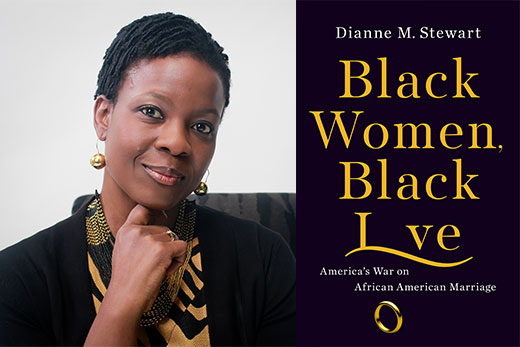
Black Women, Black Love: America’s War on African American Marriage — My Review

Hello World,

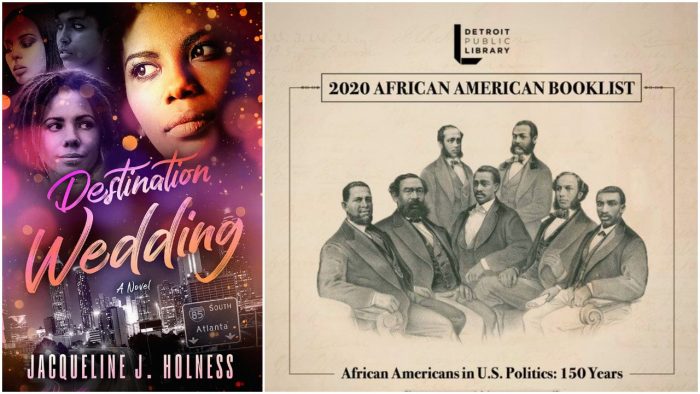
Today marks a year that my debut novel Destination Wedding was released into the world! And God has been so good throughout this year in helping me to get the word out about my book to the world. Just this week, I discovered that the Detroit Public Library  chose my debut novel as one of the best works of fiction for 2019-2020!!! It was mentioned in its 2020 AFRICAN AMERICAN BOOKLIST!!! I’m on the list with the likes of Ta-Nehisi Coates, Victoria Christopher Murray, ReShonda Tate Billingsley, Jacqueline Woodson & More!!! (Crazy, right?)

Below is the cover of the booklist, which has been published for 52 years, along with my book cover. According to the Detroit Public Library website,  “this bibliography provides a selected list of books by and/or about African Americans. The works of fiction and nonfiction for adults, children and young adults were reviewed and recommended by librarians of the Detroit Public Library.” Click HERE if you want to see the entire list.

Along with celebrating my book release anniversary, I also wanted to help spread the word about another important book that validates why I wrote Destination Wedding in the first place. Destination Wedding is my response to a real ABC News Nightline piece “Single, Black, Female and — Plenty of Company” in which it was reported that 42 percent of black women have never been married, which is double the amount of white women who find themselves in that dire predicament.

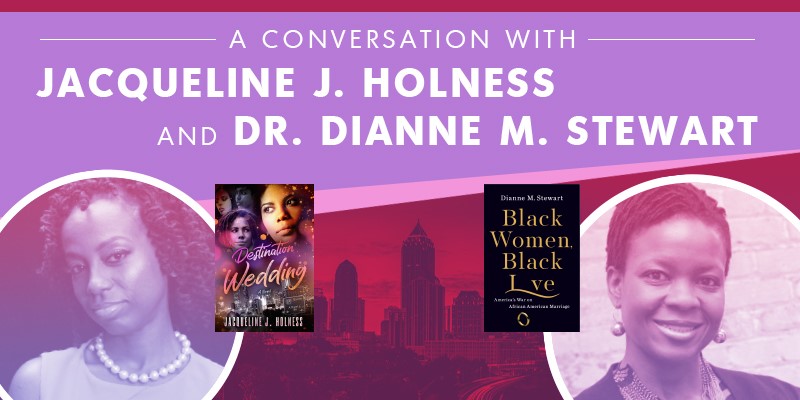
Obviously, as my book is a novel, the women in my book are fictional; however, this statistic illustrates a very real dilemma. Dr. Dianne M. Stewart, an associate professor of religion and African American studies at Emory University here in Atlanta, writes about this dilemma in her sweeping treatise Black Women, Black Love America’s War on African American Marriage, which was recently released. Dr. Stewart actually interviewed me about my novel last year at my book launch at Auburn Avenue Research Library in downtown Atlanta. Through our discussion, we were able to identify how our works intersect. While I address personal solutions to this dilemma through the lives of my main characters in my novel, Dr. Stewart identifies systemic solutions for what she refers to as “our nation’s most unrecognized civil rights issue” in her nonfiction book.

Similarly, as the ABC News Nightline report was broadcast in December 2009, Dr. Stewart cites that in 2009, 71 percent of Black women in America were unmarried, according to the 2010 US Census. As the ABC News Nightline report was broadcast in 2009, that time period was explored in my novel, but Dr. Stewart starts at slavery. She writes that “endless studies examine racial slavery in America as a reverberating assault upon Black people’s historic and contemporary liberties in perhaps every arena of life but one: romantic love and marriage.” Further down, she writes, “yet from its very beginnings, the transatlantic trade in human cargo, which set the American institution of African bondage in motion, required the disruption of intimate relationships and marriages.”

In Chapter 1 “Jumping the Broom: Racial Slavery and America’s Roots of Forbidden Black Love,” Dr. Stewart writes about a 19-year-old slave Celia who was hanged to death after killing her owner, who repeatedly raped her. Her true love was her boyfriend George, but she was unable to “freely choose a Black man as her lover and life partner.” Additionally, she writes that “less than 1 percent of slaveholders in the South held more than 100 persons in bondage, and by 1860 enslaved persons in the South, on average, lived in groups of 10. For this reason, enslaved women such as Celia were fortunate if they found romantic partners residing on the same properties with them.”

In the next chapter “Slow Violence and White America’s Reign of Terror,” Dr. Stewart writes about how Black love continued to be under assault even after slavery ended. Although they had been married for 22 years,  Atlanta, Georgia resident Carolyn Gilbert’s husband, 42-year-old Henry, was lynched in 1947. Through sharecropping, the  couple had saved enough to buy a 111-acre farm. But reportedly, he was shot and killed for allowing a “young black troublemaker” to hide on their farm. Additionally, a police officer shot Henry claiming the “deacon and treasurer at his small Baptist church ‘drew a chair on me.'”

In the third chapter, “Love and Welfare: Johnnie Tillmon and the Struggle to Preserve Poor Black Families,” Dr. Stewart interweaves pop culture examples in addition to more poignant real life cases of how Black love has been disrupted throughout the decades. I loved the 1974 movie Claudine. Dr. Stewart wrote that the movie “depicted the structural obstacles welfare posed to Black love and marriage and the stark reality that for millions of Black women in America at the time, choosing marital fulfillment (as the main character Claudine eventually does) meant loosing welfare benefits.”

Due to my age, I’m most familiar with the examples presented in the next chapter “Black Love in Captivity: Mass Incarceration and the Depletion of the African American Marriage Market.” And the first sentence in this chapter is particularly arresting. Pun intended. “No other institution has perfected America’s project of forbidding black love better than the contemporary prison industrial complex.” Further down, she writes, “Black men are incarcerated at much higher rates than any other group in the United States, even when convicted for the same crimes.” Did you know that former President Obama was the “first sitting president to actually tour a federal prison in 2015?” Additionally, former President Obama, “actually commuted the sentences of more inmates than his twelve predecessors combined.”

Speaking of Obama, Dr. Stewart writes about the former First Lady Michelle Obama in the chapter “Will Black Women Ever Have it All? Michelle Obama, Kheris Rogers and African Americans’ Shifting Landscapes of Love.” Dr. Stewart cites an article “Dark and Lovely, Michelle” by Vanessa Williams. Williams wrote, “A lot of Black women fell for Barack Obama the moment they saw his wife.” Let me raise my hand because that is true for me as well. While Dr. Stewart provides example after example of how Black love has been under assault by exterior forces, in this chapter, she presents an interior force that has its beginnings in slavery. In slavery, lighter-skinned Black people were treated better than their brothers and sisters of darker hues. And unfortunately, due to colorism, light-skinned Black women have more of a chance of getting married than medium-skinned and dark-skinned Black women, according to Dr. Stewart. Within this chapter, Dr. Stewart presents many solutions that I won’t reveal here because you have to read the book. However, one solution that I will share from her book is addressing colorism in the Black community.

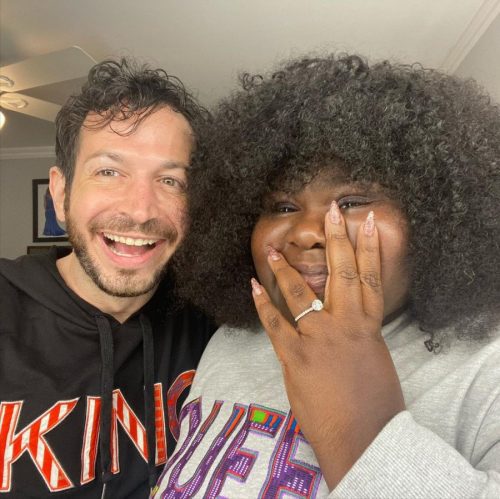
Recently, actress Gabourey Sidibe shared that she got engaged to Brandon Frankel, who also works in entertainment. Sidibe, who is a dark-skinned black woman, has apparently received some criticism from Black men for being engaged to a White man. One YouTube blogger points out that in the past, many Black men have criticized Sidibe for her complexion and deemed her as undesirable and therefore have no standing to critique her coupling choice now. See the commentary HERE. Dr. Stewart writes that “Black women not only confront a shortage of Black men but also wrestle with internalized and interpersonal color consciousness.”

You have to read the book to experience the full breadth of Dr. Stewart’s exhaustive examination of this dilemma, but I hope I’ve provided enough information to make you buy your own copy of Black Women, Black Love America’s War on African American Marriage. It is a must-have resource if you care about Black love. I think employing personal solutions while addressing systemic solutions is the most comprehensive way to win the war on African American marriage.

What say you?

For more information about Dr. Stewart, see her website: DianneMStewart.com.

Any thoughts?


The Top 10 Blog Posts and or Articles for Black Christian Women in February 2018

Hello World,

I’m back with my monthly roundup of blog posts and or articles for black Christian women! So below is my Top 10 monthly roundup of blog posts and or magazine/newspaper articles for black Christian women for February ( but you don’t have be a black Christian woman to to check them out 🙂  As usual, let me know if you like my list! Enjoy and share!

1. “See the Newly Unveiled Official Portraits of Barack and Michelle Obama” by Mary Rhodan

Excerpt: The National Portrait Gallery unveiled the long-awaited portraits of former President Barack Obama and First Lady Michelle Obama on Monday. The Obamas’ portraits were painted by New York based artist Kehinde Wiley and Baltimore-based artist Amy Sherald. They are the first African Americans commissioned to paint official portraits of the first couple for the National Portrait Gallery. The two artists’ works will be on display at the National Portrait Gallery starting on February 13. Aside from the White House, the Gallery is home to the only complete collection of presidential portraits; according to the Smithsonian, it is comprised of more than 1,600 works. See more at: time.com.

2. “Rosa Parks Was My Aunt. Here’s What You Don’t Know About Her” by Urana McCauley

Excerpt: Sometimes I struggle with social media because it seems there’s always somebody belittling Auntie Rosa. I recently saw someone post that my aunt wasn’t really black. Or people say that she was strategically placed on the bus in Montgomery because she was lighter skinned. It’s amazing to me that they would think that. Yes our family ancestry is part African American, part white, and part Native American. Auntie Rosa considered herself black and was treated as black. We have a lot of work to do in this country regarding colorism, but whether you’re light or dark — and this is still true today — you are black in America and you’re going to be treated accordingly. See more at: shondaland.com.

3. “‘Black Panther’ brings unexpected boost to makers of African inspired clothing” by Nedra Rhone and Shelia M. Poole

Excerpt: In Wakanda, the fictional African country from which Black Panther hails, the prints, colors and cuts of African clothing are woven throughout whether in an action scene, a street scene or a backdrop to other significant moments. Atlantan Carl Ulysses Bowen was one of tailors on the “Black Panther” film. Ulysses , who owns a tailoring and custom clothing business in Buckhead, said he added some of his own touches to the clothes designed by Ruth Carter. “I drew my inspiration from African culture and different African tribes within that culture,” said Bowen, who graduated from Morehouse College in 2005. He perused videos and looked at African history and photography books. He also scoured the internet. See more at: myajc.com.

4. “Ayesha Curry Is Pregnant, Expecting Third Child With Stephen Curry” by Emily Longeretta

Excerpt: The couple are already the proud parents to daughters Riley, 6, and Ryan, 3. The CoverGirl spokesperson met Curry, 29, when they were 14 and 15, attending the same church youth group. The went on to marry in 2011. See more at: usmagazine.com.

5. “Stephanie Paul stays true to Haitian heritage” by Yash Bhika

Excerpt:  In Bayshore Drive in Naples, Florida, lies the Naples New Haitian Church of the Nazarene. The church is owned by Paul’s dad, Renauld. This is where she spent a good portion of her childhood. Paul would learn how to sing gospel songs, which she still sings to this day. Just as she was able to express herself inside her church, she also had the love and support of her family. It is in Naples where she grew up as the youngest of nine siblings. Her siblings are Lo, John, Jean, Matt, Josie, Nephtalie, Da-anna, Eunice and Dann. There is a 25-year age gap from Paul’s oldest sibling, Lo, to her. All of her siblings participated in sports either at the collegiate or the high school level. They all played basketball and Paul was able to learn from them. Despite such a large discrepancy in ages between the children, the love for each other was always there. See more at: redandblack.com.

6. “‘We Mean Business or No Washing’: The Atlanta Washerwomen Strike of 1881” by Brandon Weber

Excerpt: In the 1880s, twenty years after the “official” end of slavery in the United States, African Americans continued to suffer extreme oppression and violence. Lynchings were common and “separate but equal” Jim Crow laws gave African Americans minimal access to schools, the military, and labor unions—the kinds of institutions that helped other Americans move toward prosperity. It was in this context that a group of African American washerwomen in Atlanta organized themselves to demand better wages and working conditions. “The Washing Society,” as they called themselves, struck in the summer of 1881, taking on the business and political establishment of Atlanta, Georgia. The action served to remind the city’s white majority whom they depended on for the clothes they wore. The strike—a group of black women organizing against omnipresent discrimination to demand recognition and respect for their work—stands out in union history as a most unlikely success. See more at: progressive.org.

7. “Lillian Thomas Fox was a journalist and champion for her race” by Dawn Mitchell 

Excerpt: History refers to Lillian Thomas Fox as a journalist and club woman, which seems to be a slight on a woman so far ahead of her time. As a black woman at the end of the 19th century, she became a champion for public health for the Indianapolis black community.Fox was born in 1854 in Chicago to Rev. Byrd Parker, an AME minister, and Janet J. Johnson, a schoolteacher. Fox’s father died in 1860, and her mother married Robert E. Thomas. The family moved to Wisconsin. Lillian took his last name. See more at: indystar.com.

8. “4 ways that black Catholic sisters rewrote the American story” by Diane Batts Morrow

Excerpt: As we observe Black History Month in 2018, examining the early history of the Oblate Sisters of Providence can teach us several important lessons. The sisters proved exceptional in 19th-century America: They were black and free in a slave society that privileged only whiteness; female in a male dominated society; Roman Catholic in a Protestant society; and pursuing religious vocations in a society doubting the virtue of all black women. Organized in Baltimore in 1828, this pioneering black sisterhood dedicated themselves to educating black girls. The Oblate Sisters confronted many challenges in their early years. Most white people did not believe that black people could lead virtuous lives and rejected as impossible the idea of a black Catholic sisterhood. See more at: catholicphilly.com.

9. “Doing a New Thing – A 21st Century Vision for AME HBCUs” by Tiffany Brockington

Excerpt: Arguably, the two most important black spaces in America are HBCUs and the Black Church.  The importance and connection of both is outlined in the new documentary, “Tell Them We Are Rising: The Story of Historically Black Colleges and Universities.”  The title of this documentary is attributed Richard Wright Sr., and serves as a directive which influenced not just the arc of the film, but several historically black campuses.  See more at: hbcudigest.com.

10. “A Harlem Woman With A Wardrobe Worthy Of A Deeper Look” by Channing Hargrove

Excerpt: On Friday, Turner’s wardrobe went on display once again, this time at the Projects+ Gallery in Saint Louis, Missouri. Open now through March 31, the exhibit features a series of black and white photographs of Turner’s pieces by Dario Calmese, which explore the role of Black churches “as activators not only for imagination but as crucibles for the construction of self” within the African American community. Calmese, whose father was a pastor, has a personal connection to to Turner’s story. “Growing up in the church, the ritual of getting dressed for Sunday morning is a heavy thread in the fabric of my childhood memories,”he told Vogue. Through the photos, it’s evident that Turner has a similar collection with clothing. See more at: refinery29.com.

If you know of any black Christian women bloggers and or writers, please e-mail me at jacqueline@afterthealtarcall.com as I’m always interested in expanding my community of black Christian women blogs and websites. As I noted before, while this is a roundup of interesting blog posts and or magazine and newspaper articles for black Christian women, you don’t have to be one to appreciate these pieces  🙂.

Any thoughts?