Hello World,
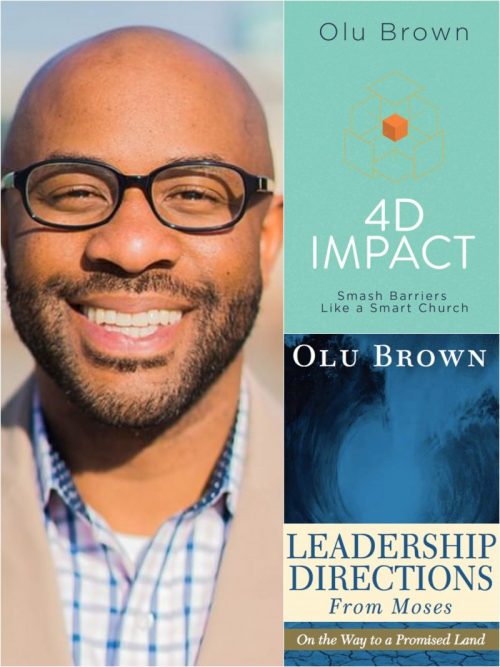
As a pastor’s daughter and granddaughter, I know church. Many people have visited a church on a Sunday morning for worship or maybe even on Wednesday evening for Bible Study. But during those other days of the week, other business is going on, trust and believe that. And many times, a church is struggling with growing its membership, developing a strong church and putting in place visionary leadership. When my father retired as the pastor of my church after 38 years in 2017, our church has been in this place because we’re in a new phase of the church. So when I got the chance to interview Pastor Olu Brown, I was excited to do so. Below is his bio.
Olujimi (Olu) Brown is the father of Daya Elom Brown and Langston Wesley Brown. Olu is a native of Lufkin, Texas. He graduated from Jarvis Christian College in Hawkins, Texas and earned a Master of Divinity degree from Gammon Theological Seminary of the Interdenominational Theological Center in Atlanta, Georgia.
He serves as the Lead Pastor of Impact Church, a young congregation in the East Point community of Metropolitan Atlanta (impactdcd.org). With Olu’s vision and leadership, since its founding in 2007, Impact has grown from a core team of 25 people to more than 2,400 attendees each Sunday in person and 1,600 online with a $4M budget, and listed at number 5 in the 25 Fastest Growing Large United Methodists Churches, 2018 Edition.
Olu strongly believes in an active church, one that makes a meaningful impact in the lives of individuals and communities. Impact is a multicultural community committed to Doing Church Differently™. Impact DCD redefines the church experience through inclusiveness, relatable messages, energetic weekly gatherings, unique events and activities, relevant youth programs and community outreach. The people of Impact are compelled to help bring healing, justice and compassion to the world.
Pastor Brown wrote about church management and leadership in his latest books 4D Impact: Smash Barriers Like a Smart Church and Leadership Directions from Moses: On the Way to a Promised Land. Below is my interview with him about these books.
1. Why did you feel the need to write “4D Impact: Smash Barriers Like a Smart Church?” Were you approached to write this book?
I felt the need because in part I travel quite a bit and in traveling, I get an opportunity to meet different leaders and different pastors and I’m finding that although many have great educational backgrounds and have had great experiences in their local churches, the systems, people and culture changes so quickly that they’re not able to adapt to those changes fast enough. And so I wrote ‘4 D’ to say, ‘Hey, there are four critical areas in every church, wherever you happen to be, if you could focus on these areas, you could have a healthy, more vital, growing church.’ And those areas of course from the book are technology, worship, systems and hospitality, which on the surface sounds very easy, low-hanging fruit. But as you dig through that and apply it to your local church, it becomes some of the hardest but most rewarding work that you will ever do.
2. You recently hosted an online conference regarding the principles you shared in “4D Impact.” How did you teach the principles you learned in the one-hour conference?
It wasn’t designed to teach all of the principles in one hour. It was an introductory course. It was an introduction for people who may be skeptical, people who have heard these things before and they’re not quite sure and people who are totally sold out and they really want to tell their leaders, ‘Here is what I’ve been talking about. Here is someone else saying it.’
 3. In this book, you share stories of success and failure from Impact Church’s ongoing journey. Tell me about one success and one failure and what you learned?
One story of success is beginning around literal coffee tables in Starbucks with a group of volunteers who are still so passionate about the vision we’re casting that 12 years later, Impact is what it is. So although now we have staff and our budget is larger, we historically have always and will always be dependent on volunteers. So as it relates to volunteerism, that is one of our successes.
One failure story which was really a learning opportunity is around what it means to literally disciple people to the next level. When you think about churches, most churches do discipleship or should do discipleship, meaning, ‘Hey, I want to be a Christian. I accept Christ and 10 years later, I shouldn’t be in the same place.’ So I don’t call it a failure but an opportunity. It is typical of new churches, meaning we start like gangbusters and then one day, you wake up and you realize, ‘Oh my God, we have to take these people somewhere.’ So that is a constant question for us, ‘How do we take people to a place of Christian maturity while knowing that as a 12-year-old, preteen church, we can’t take people all of the way. But what is that part of the way that God is calling us to? So that’s been an opportunity for us to learn. We don’t always get it right but one day, we hope to say, ‘If you hang out at Impact, this is what you will look like as a Christian.’
How did you galvanize those volunteers?
I was blessed to work at a large church for about five and a half years before we started Impact. While I was there, I built some great relationships and I also built some great relationships in the marketplace who I was able to pull in. And it wasn’t just me. The volunteers invited people so we all pulled in folk. So it was relationships.
What do you mean by “you can’t take people all of the way?”
If you think about a discipleship model in the alphabet, beginning with A and going all the way to Z, some churches will say, we can take you all the way to Z, but that’s really not true. You have to think of a church like a supermarket or another store. Target is great, but they’re not going to sell everything. Wal-Mart is great, but they’re not going to sell everything. And so typically a shopper has to piecemeal their shopping list along the lines of two or three locations. And that’s the reality of where spirituality is in the 21st century. No one church can do everything for one person or should we. But we should be able to know what we do very well.
So when we talk about a discipleship model, that may mean you meet Impact as a seeker, trying to understand who Jesus Christ is and then when you leave Impact, whenever that is, maybe you will have taken a Bible Study or been part of a small group that helps you understand the Bible, that helps you understand prayer, that helps you understand other spiritual disciplines. And then you can go on to another church and go deeper in another spiritual dynamic or in another area and while you’re with them, you’re learning even more than what you learned than when you were with us. But we were a part of that foundational story that helped you get to the next level of your spiritual growth.
So you don’t think a church should try to keep members for their lifetimes?
It depends on the life and stage of the church and the life and stage of the member. For instance, a month ago, I was at a church and they were celebrating their 154th church anniversary. There are some members who have been members of that church for all of their lives and that works for them. But I think the way that culture is shifting because of jobs, because of geography, because folks today don’t mind living in a city two or three years, it’s going to be virtually impossible for healthy, thriving growing churches to say we have lifetime members. We have lifetime support. We have lifetime encouragement. And we have lifetime shared stories but for you to be here your entire life is unlikely and typically if you’re a young adult.
4. Some people are skeptical of megachurches. I’m not sure if Impact is considered a megachurch but it is a large church. For example, my husband was just saying to me that he wonders how some churches grow to megachurch size without some shenanigans being involved or the message of the gospel being compromised somehow. As a church growth expert, do you feel that every church should have thousands of members in order to be healthy?
I don’t. The numerical size does not determine health or vitality of a local church. What most people don’t know is in America, the average size church is 75 people so when you see these large churches and megachurches or gigachurches, those are a minority. They are not the norm. It’s like what you see in the United States of America. It’s mostly made up of these small towns. You’ve got these huge cities like Atlanta but if you travel outside of Atlanta, a lot of America is rural, grassroots people who grow crops, who have industries that literally service the world. And it’s the same thing with the local church. I believe my expertise comes in by saying, ‘I don’t necessarily want you to grow larger for the sake of; I want you to be as healthy as you can be and as vital as you can be. And if you do that, you will reach the world for Jesus Christ.’
But to your husband’s point, I do believe some churches can grow that large without any abnormalities, without anything happening that can be indifferent or bad because there are just some churches and yeah, it’s spiritual and it’s favor, but God’s favor is on every church. Some people think this church is big because God’s favor is on it. No God’s favor is just as present in that church with 80 people but there are just some things that work for that church. It may be a strong lay leader. It may be a strong Sunday School system. It may be a strong small group system.
Or they are just are in the right geography. Sometimes when you watch football, you will see these small towns that have college teams. For instance, you take the University of Georgia. I’m here right now in Michigan and I just passed Notre Dame. Now Notre Dame is a small city, but it has a huge school. And I think sometimes these schools are located in places where there isn’t a pro team presence so that the college team is the pro team and there is a lot invested in that. You can just be in the right community and you’re the only show in town. So by nature of being the only show in town, you’re going to be bigger if you’re healthy.
5. To assess the “health” of a church, you assess culture, hospitality, worship, and technology. Tell me more about this assessment process and the diagnostic tools in the book.
The first thing I do is to come in and get to know the church’s story and that means getting to know their history and their present and then from that you will begin to hear the culture of the church because every church has a culture. Culture may mean very strong pastoral leadership. Culture may mean very strong lay leadership. Culture may mean this is an outreach and missions church. You get to know their stories and their culture.
And then you observe their worship because people can tell you about their worship but you actually have to sit in on their worship. A couple of weeks ago, I was in Florida, sitting in on Sunday morning, on a worship experience at a church. After that, I was able to give some written feedback and oral feedback to the leader of that church or the pastor who will soon be the leader so that he and the other leaders can take that and work through each of those details related to worship and make that more vital.
Technology is more of an Excel spreadsheet where you’re taking inventory of current technology, outdated technology. You’re breaking that into software because a lot of people don’t think about that. And you also break that into hardware. And from that you can address budget decisions and directional path decisions about what we want to look like as a church in technology.
Systems can be broad but one of the things I tell people about systems is that there are open systems and closed systems. And you think about language for instance. Whenever someone stands and gives an announcement and says, ‘Hey, thank you for being a part of church family. We’re glad you’re here.’ Words like that are closed system words meaning when you say family, that means we have everybody we need and we don’t necessarily need new people. So your language is a system and people don’t think about that. So myself and my team leaders will come in as outsiders with neutral opinions, wanting to help and not harm you because we all want to reach people for Jesus Christ.
6. What inspired you to write “Leadership Directions from Moses?” which is described a handy tool for those dealing with the departure of key members from the church. 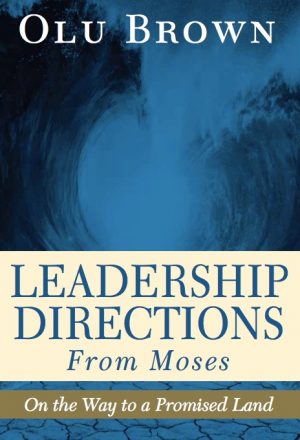
It doesn’t matter the age or stage of a church, people leave from day 1. The very first Sunday service that we had Impact, some people left afterward. People come with preconceived expectations. And we started in a middle school. And there weren’t any crosses up. There were no stained glass windows. Some people said, ‘This is great for y’all but it’s not for me.’ So people are always leaving and people are always coming.
But I wrote this book for leaders like me who struggle with sharing vision, struggle with delegation and also who struggle with understanding that the same way God speaks to me, God also speaks to other people. So when we read Moses’ story that then leads into Joshua, we always assume at all 12 tribes made it into the Promised Land. But if you read Numbers 32, the Reubenites and the Gadites come to Moses when they are in a geographic area called the Transjordan, they say, ‘Hey Moses, we like where we are.’ Moses makes a compromise and says, ‘Okay, if you help us go fight for the land, then you and your families can come back here.’ So time moves on. Moses dies. Joshua is the new leader. Joshua divides out the land and that’s when Joshua tells those two tribes, you can now return to that place.
What typically happens with leaders is that we demonize people for having a different vision or a different path, and we then only focus on those people who don’t want to go where you feel God has called you to go and those are two fatal mistakes in leadership. Because one, we don’t honor other people’s vision and how they hear God and two, we take our eyes off of the majority of people who still want to move forward and we put all of our emphasis on the minority group of people who don’t necessarily want to move forward. So it works through three critical conversations: self-conversation around self-awareness and self-differentiation, conversation with others around casting vision and helping them understand what God is sharing in your heart, and finally those difficult conversations that we have with God when you’re down and out. Ultimately, we all have a promise and we can get there but we only get there through these difficult conversations.
7. Is there anything else you would like to add?
First of all, thank you for this interview. I do share with groups as I travel and at home, that in spite of all the difficulties with leaders in general, but specifically with leaders of local churches, both clergy and lay people, are facing, this is the greatest evangelistic opportunity of our lifetime. I know we’re seeing a decline in church attendance and more and more people are opting out of religion in general, but I still believe this a great opportunity if we’re willing to reach people in a 21st century way with the same theology we’ve always had but we have to be willing to retool, we have to be willing to reshape and we have to be willing to reach culture where they are and not expect them to walk through our doors and just show up.
For more information about 4D Impact: Smash Barriers Like a Smart Church and Leadership Directions from Moses: On the Way to a Promised Land and Pastor Olu Brown, go to @pastorolubrown on Instagram and his website olubrown.org.
Any thoughts?


 As usual, let me know if you like my list! Enjoy and share!