Black Women, Black Love: America’s War on African American Marriage — My Review

Hello World,

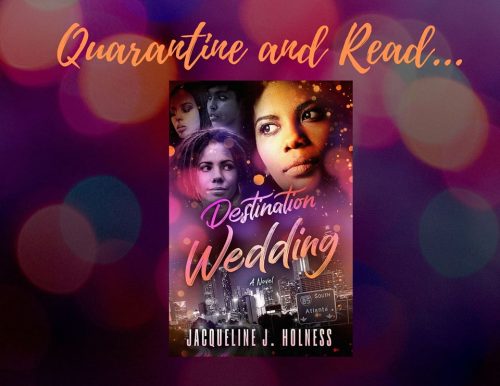
Today marks a year that my debut novel Destination Wedding was released into the world! And God has been so good throughout this year in helping me to get the word out about my book to the world. Just this week, I discovered that the Detroit Public Library  chose my debut novel as one of the best works of fiction for 2019-2020!!! It was mentioned in its 2020 AFRICAN AMERICAN BOOKLIST!!! I’m on the list with the likes of Ta-Nehisi Coates, Victoria Christopher Murray, ReShonda Tate Billingsley, Jacqueline Woodson & More!!! (Crazy, right?)

Below is the cover of the booklist, which has been published for 52 years, along with my book cover. According to the Detroit Public Library website,  “this bibliography provides a selected list of books by and/or about African Americans. The works of fiction and nonfiction for adults, children and young adults were reviewed and recommended by librarians of the Detroit Public Library.” Click HERE if you want to see the entire list.
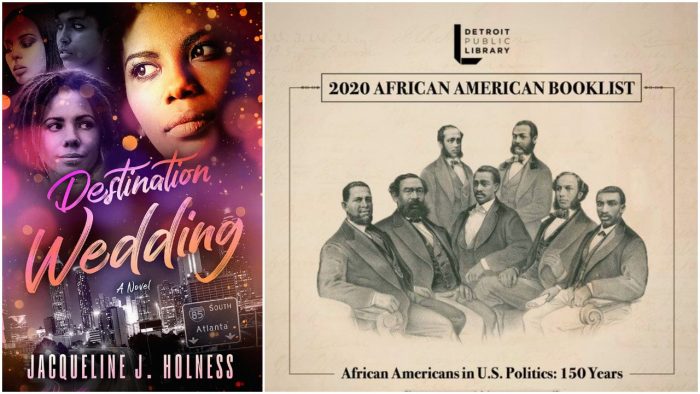
Along with celebrating my book release anniversary, I also wanted to help spread the word about another important book that validates why I wrote Destination Wedding in the first place. Destination Wedding is my response to a real ABC News Nightline piece “Single, Black, Female and — Plenty of Company” in which it was reported that 42 percent of black women have never been married, which is double the amount of white women who find themselves in that dire predicament.

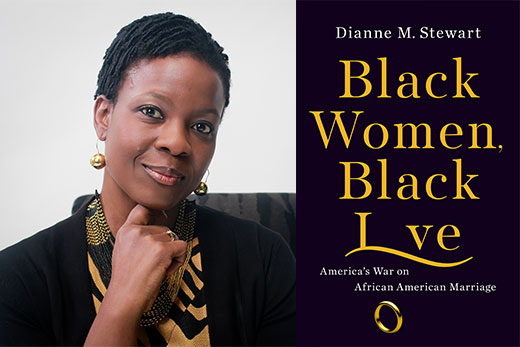
Obviously, as my book is a novel, the women in my book are fictional; however, this statistic illustrates a very real dilemma. Dr. Dianne M. Stewart, an associate professor of religion and African American studies at Emory University here in Atlanta, writes about this dilemma in her sweeping treatise Black Women, Black Love America’s War on African American Marriage, which was recently released. Dr. Stewart actually interviewed me about my novel last year at my book launch at Auburn Avenue Research Library in downtown Atlanta. Through our discussion, we were able to identify how our works intersect. While I address personal solutions to this dilemma through the lives of my main characters in my novel, Dr. Stewart identifies systemic solutions for what she refers to as “our nation’s most unrecognized civil rights issue” in her nonfiction book.
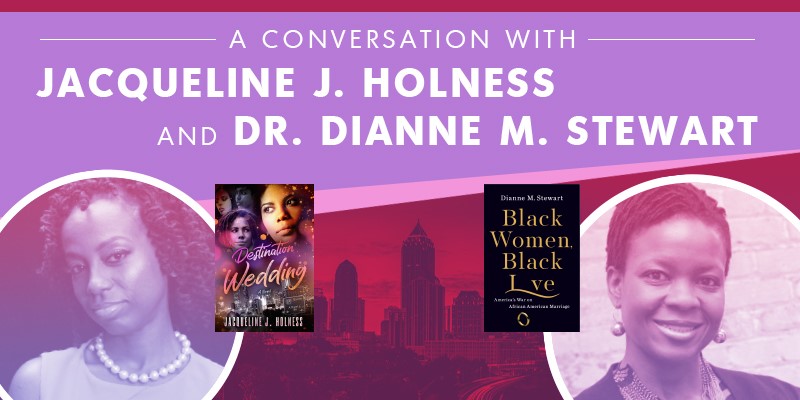
Similarly, as the ABC News Nightline report was broadcast in December 2009, Dr. Stewart cites that in 2009, 71 percent of Black women in America were unmarried, according to the 2010 US Census. As the ABC News Nightline report was broadcast in 2009, that time period was explored in my novel, but Dr. Stewart starts at slavery. She writes that “endless studies examine racial slavery in America as a reverberating assault upon Black people’s historic and contemporary liberties in perhaps every arena of life but one: romantic love and marriage.” Further down, she writes, “yet from its very beginnings, the transatlantic trade in human cargo, which set the American institution of African bondage in motion, required the disruption of intimate relationships and marriages.”

In Chapter 1 “Jumping the Broom: Racial Slavery and America’s Roots of Forbidden Black Love,” Dr. Stewart writes about a 19-year-old slave Celia who was hanged to death after killing her owner, who repeatedly raped her. Her true love was her boyfriend George, but she was unable to “freely choose a Black man as her lover and life partner.” Additionally, she writes that “less than 1 percent of slaveholders in the South held more than 100 persons in bondage, and by 1860 enslaved persons in the South, on average, lived in groups of 10. For this reason, enslaved women such as Celia were fortunate if they found romantic partners residing on the same properties with them.”

In the next chapter “Slow Violence and White America’s Reign of Terror,” Dr. Stewart writes about how Black love continued to be under assault even after slavery ended. Although they had been married for 22 years,  Atlanta, Georgia resident Carolyn Gilbert’s husband, 42-year-old Henry, was lynched in 1947. Through sharecropping, the  couple had saved enough to buy a 111-acre farm. But reportedly, he was shot and killed for allowing a “young black troublemaker” to hide on their farm. Additionally, a police officer shot Henry claiming the “deacon and treasurer at his small Baptist church ‘drew a chair on me.'”

In the third chapter, “Love and Welfare: Johnnie Tillmon and the Struggle to Preserve Poor Black Families,” Dr. Stewart interweaves pop culture examples in addition to more poignant real life cases of how Black love has been disrupted throughout the decades. I loved the 1974 movie Claudine. Dr. Stewart wrote that the movie “depicted the structural obstacles welfare posed to Black love and marriage and the stark reality that for millions of Black women in America at the time, choosing marital fulfillment (as the main character Claudine eventually does) meant loosing welfare benefits.”

Due to my age, I’m most familiar with the examples presented in the next chapter “Black Love in Captivity: Mass Incarceration and the Depletion of the African American Marriage Market.” And the first sentence in this chapter is particularly arresting. Pun intended. “No other institution has perfected America’s project of forbidding black love better than the contemporary prison industrial complex.” Further down, she writes, “Black men are incarcerated at much higher rates than any other group in the United States, even when convicted for the same crimes.” Did you know that former President Obama was the “first sitting president to actually tour a federal prison in 2015?” Additionally, former President Obama, “actually commuted the sentences of more inmates than his twelve predecessors combined.”

Speaking of Obama, Dr. Stewart writes about the former First Lady Michelle Obama in the chapter “Will Black Women Ever Have it All? Michelle Obama, Kheris Rogers and African Americans’ Shifting Landscapes of Love.” Dr. Stewart cites an article “Dark and Lovely, Michelle” by Vanessa Williams. Williams wrote, “A lot of Black women fell for Barack Obama the moment they saw his wife.” Let me raise my hand because that is true for me as well. While Dr. Stewart provides example after example of how Black love has been under assault by exterior forces, in this chapter, she presents an interior force that has its beginnings in slavery. In slavery, lighter-skinned Black people were treated better than their brothers and sisters of darker hues. And unfortunately, due to colorism, light-skinned Black women have more of a chance of getting married than medium-skinned and dark-skinned Black women, according to Dr. Stewart. Within this chapter, Dr. Stewart presents many solutions that I won’t reveal here because you have to read the book. However, one solution that I will share from her book is addressing colorism in the Black community.
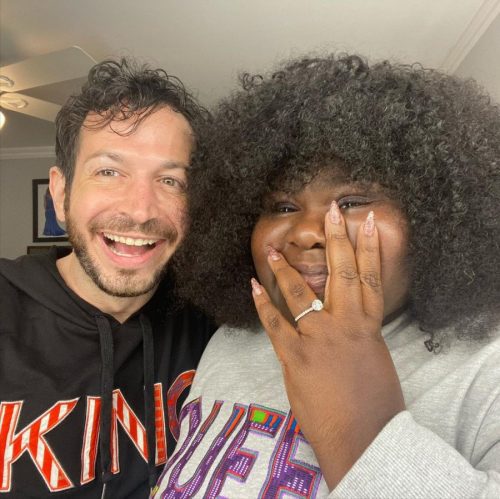
Recently, actress Gabourey Sidibe shared that she got engaged to Brandon Frankel, who also works in entertainment. Sidibe, who is a dark-skinned black woman, has apparently received some criticism from Black men for being engaged to a White man. One YouTube blogger points out that in the past, many Black men have criticized Sidibe for her complexion and deemed her as undesirable and therefore have no standing to critique her coupling choice now. See the commentary HERE. Dr. Stewart writes that “Black women not only confront a shortage of Black men but also wrestle with internalized and interpersonal color consciousness.”

You have to read the book to experience the full breadth of Dr. Stewart’s exhaustive examination of this dilemma, but I hope I’ve provided enough information to make you buy your own copy of Black Women, Black Love America’s War on African American Marriage. It is a must-have resource if you care about Black love. I think employing personal solutions while addressing systemic solutions is the most comprehensive way to win the war on African American marriage.

What say you?

For more information about Dr. Stewart, see her website: DianneMStewart.com.

Any thoughts?
 

Seven Reasons I’m Thankful in 2020…My Pandemic Praise!!!


Hello World,

With Thanksgiving coming up this week, this post is inspired by a post I saw on Facebook some weeks ago when the person who posted wrote that despite all that has unfolded in this devastating year, there are still some things to be thankful for in 2020. And the person encouraged everyone to comment on how they’ve still been blessed despite it all. I was among those who posted. I only shared one thing on that post, but I have seven to share with you, my dear readers.

1. Although I still wear contacts during the day and glasses at night, as of this year, I have been restored to 20/20 vision! In fact, I wrote a post about it earlier this year. Below is an excerpt of Seven Scriptures to Provide Insight to the Coronavirus Crisis (ODE to 20/20 Vision)

By now you must know that any vision board someone created for 2020 has been totally wrecked. I haven’t had 20/20 vision since before I was in the third grade when I started wearing glasses, but I was among those who decreed and declared that 2020 would be my Year of Perfect Vision. When this Coronavirus Crisis started a month ago or so, I thought my resolution to have 20/20 vision was misguided. But a month later, I see the Good Shepherd is faithful and guiding me (and all y’all)  into perfect vision after all — even if it wasn’t what I thought I saw at the dawn of this New Year. As my hubby shared with me, I do believe individually we will have personal insights, and that there are some collective insights that all of us will share. Read the rest HERE. 

2. Precious family members have been spared of the worst of COVID-19!!! Although I’ve had family members who have suffered from COVID-19 with one even being hospitalized for several days, no family members that I’m aware of, even my elders, have been casualties of coronavirus. This is a sickness you don’t want to experience even if death is not the end result, but I thank God He has seen fit to spare the lives of my family as of now.

3. My hubby and I have continued to work. Many people have lost their jobs due to COVID-19, but thankfully, my husband and I still have the financial resources to take care of our two-person household. My husband works in healthcare so you would automatically think that designation translates into job security, but many people in healthcare have seen their income adversely affected. For example, I only recently saw the dentist a few weeks ago after having rescheduled an earlier appointment. From what I’ve read, many are still putting off seeing doctors for appointments unrelated to coronavirus for fear they will be exposed while at the doctor’s office.

4. Although I have lost a vital-in-more-way-than-one income opportunity, I have pivoted. Y’all Jamaicans have more than job and I’m no exception. I’ve been teaching group fitness classes twice a week at L.A. Fitness for more than a decade. It was one of my side hustles. But that ended in March. Although I can go back if I like, I don’t feel comfortable at a gym right now. I don’t know about you, but I’m huffing and puffing at the gym as a rule. There is no way that I see avoiding an airborne illness at the gym. That being said, although I miss my class, I’ve been able to keep up my workouts at home and in a nearby park. It’s not the same, but it will do. Most of all, I thank God for the continued health and strength that I enjoy that enables me to workout!

5. I’ve been able to continue to promote the release of my debut novel  Destination Wedding I was just getting into the groove of promoting Destination Wedding when the world shut down. (Have you bought your copy?) Thankfully, as my novel was released in December 2019, I was able to have a book release party at Auburn Avenue Research Library, host a book signing at a local bookstore (Nubian Bookstore) and attend a book club meeting where Destination Wedding was featured before the pandemic was announced. But with the pandemic announcement, many of the events that I was planning had to be reworked or cancelled altogether so I was worried about how I would promote Destination Wedding going forward. Although I still believe that the pandemic had a negative impact on some of my promotion efforts, one benefit of the pandemic was that I was able to meet with several book clubs via Zoom. I’m not sure if I would have been able to do so otherwise. Additionally, I was able to participate in other online events that I may have not have had access to otherwise.

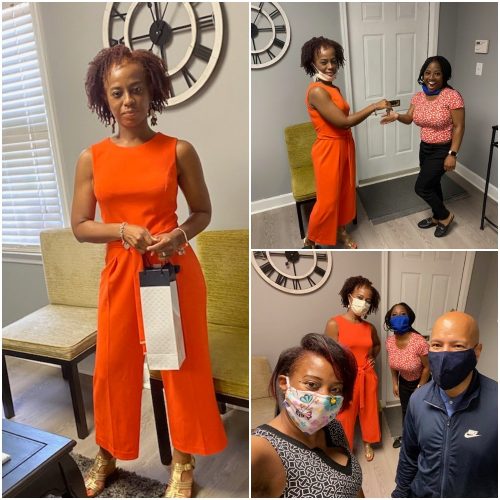
6. I sold my first home during a pandemic! Y’all, when I was 28 years old and a brand new reporter for a small newspaper, God blessed me to buy a townhome although I was making practically $10 a paycheck! I experienced many single girl shenanigans and grew up as a grown woman there. But as I haven’t lived there in a few years now as a married woman, I was grateful to God to be able to pay the mortgage month after month while no longer wanting that debt. At the beginning of the year, I met a realtor Dionne Sanford,  of EXP Realty, who also renovates properties. She told me that if I spent money on renovation, I would get that money back and more in sales. I didn’t want to spend the money and when the pandemic hit, I wondered how I would recoup it since real estate agents including my agent weren’t showing properties in person. But God did as He always does: Showed Up and Showed Out. I sold the property to a young lady who reminded me of myself when I first received the keys to my first adult home. See my pictures from that day above!

7. The Jehovah’s Witnesses have stopped coming by. I apologize to anyone who may be offended, but hubby and I will never be Jehovah’s Witnesses. And even though we have told them this in so many words and have not answered the door sometimes, they have continued to come by our house for some reason. But since this pandemic hit, we haven’t seen them at all…LOL…But I have received two letters from them I must say. I will give them this: they are persistent…

And I have other reasons to be thankful in 2020, but I will stop now to ask you:

What are you thankful for in 2020? Leave a comment and let me know!!!

Any thoughts?


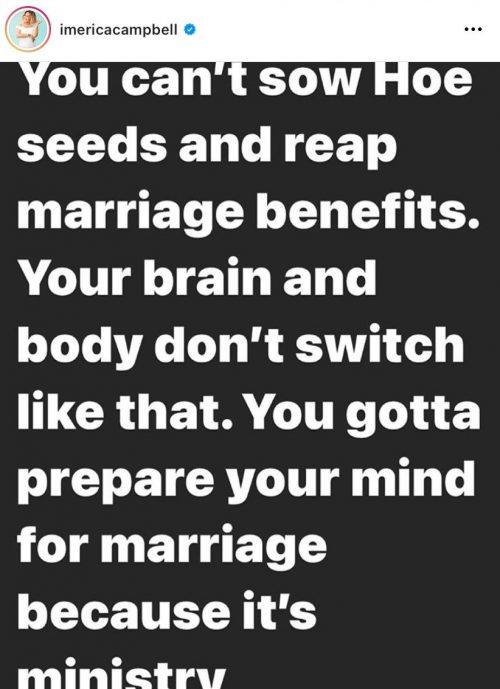
Why I Agree With Erica Campbell’s Theory About ‘Sowing Hoe Seeds’ & Not Reaping ‘Marriage Benefits’

Hello World,

First of all, Erica Campbell’s post about “sowing hoe seeds” did it what it was intended to do: get folk talking about her upcoming podcast. See her IG post below:


View this post on Instagram


A post shared by Erica Campbell (@imericacampbell)

To me, what she is said is a no brainer. Look at this like this: You can’t be eating ice cream, cake, cookies, brownies, pie, etc. for years and then expect to be satisfied by meat, vegetables and water all of a sudden! (Sexual appetite is a phrase for a reason!) In order for any habit to stick, you have to ease your way into new behavior. Pardon me for being blunt but “hoeing” (obviously from the word “whore”) is a bad habit, and it takes a while for any habit – good or bad – to be created.

According to healthline.com, it takes “anywhere from 18 to 254 days for a person to form a new habit and an average of 66 days for a new behavior to become automatic.” So if you want to turn a hoe into a housewife or a househusband, you need to allocate at least 254 to days to practice this new behavior. And even then, I believe after a new habit has been formed, there may be a relapse into old habits every now and then!

In sum, if you want a faithful wife or a faithful husband, it’s probably best to marry someone who is by nature a faithful person; however, if that hasn’t been that person’s history, that person needs to have been in a faithful relationship for at least 254 days. For me, it would have to be longer…

But folk don’t see this issue the same way that I do. Veronica Wells of Madame Noire says Erica Campbell’s theory is “baseless.” Below are a few of her points with my rebuttals afterward:

It’s a shame that in 2020, with everything else going wrong in the world, we are still falling into this trap of comparison, exalting one woman at the expense of another—with the validation of a man being the ultimate prize.

Me: Erica Campbell made no mention of a gender in her post. “Hoe” is a slang word for a “whore.” The definition of a “whore” is “a person who engages in sexual intercourse for pay.” While a “whore” is typically associated with a woman, that does not have to be the case according to the definition of the word. Additionally, I assume Erica is not talking a person who engages in sexual intercourse for pay. Rather she is talking about a person who is sexually promiscuous. Furthermore, Erica Campbell has talked about her husband Warryn Campbell’s sexual infidelity in their marriage which even resulted in a pregnancy so it is very possible that she didn’t mention for a gender for that reason. And it’s likely that she has intimate knowledge of what she said in her post…

Rarely, do we hear people still deeply entrenched in the church say it is hard to go from virginal and pure to being sexually expressive—even in the context of a marriage ordained by God. If there’s anything about this post, I agree with it, it’s that flipping the switch can be difficult. But I’d argue that your sexual behavior and having the capacity to maintain a marriage don’t always go hand in hand. Maintaining a marriage, being honest, committed, loyal to someone is more about mindset than sexual promiscuity.

Me: I don’t have as much of a problem with this paragraph. However, I don’t how Veronica Wells got all of that from the few sentences that Erica Campbell posted. I think she needs to listen to her podcast before making the assumption that she said being sexually pure before marriage is ALL that it takes to have a happy marriage. I don’t think anyone who is happily married would say that…

I’ve never sat in a church when someone spoke honestly enough to say that there’s not a formula to life and there certainly isn’t one to love and marriage.

Me: This statement makes me sad. I have mostly gone to one church my whole life (my father is pastor emeritus of that church), and it has not been preached that there is a set formula to life and love and marriage. I’ve been taught that there are precepts that typically lead to living a fulfilling life and having fulfilling love and marriage in your life, but I’ve also been taught that it’s your personal relationship with God which ultimately dictates how you live your life and if love and marriage is in God’s plan for your life. How one Christian leads his or her life may look very different how another Christian leads his or her life according to God’s will for that life. And though I believe that all Christians will experience love in his or her life, that love may not be romantic love, which is also dictated by God’s will. If Veronica Wells is open to it, I hope she explores more churches where these principles are explained…

Anyway, that’s all I have. Sex is an appetite just like other appetites. Going from feast to famine is problematic whether it’s food, sex, etc.

Any thoughts